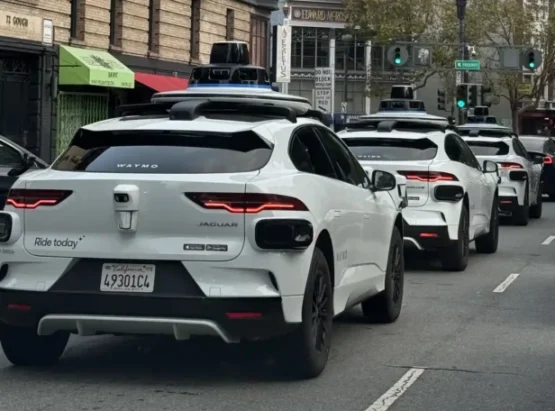
California Assembly member Cecilia Aguiar-Curry introduced legislation this week requiring robotaxi companies to maintain trained emergency response teams on the ground to handle crashes, breakdowns and traffic incidents. The companies call it an effective ban on the industry. Lawmakers say it’s a necessary safety measure.
What the bill requires
Current robotaxi operations rely on remote monitoring: operators watch vehicles through screens and take control when needed. Waymo recently disclosed that some of its remote operators work from the Philippines. Critics argue remote oversight falls short when immediate physical intervention is required — during traffic signal outages, road closures or collisions.
The new bill would require companies to maintain local response teams capable of reaching incident sites. It joins existing measures: starting July 1, 2026, law AB 1777 takes effect, requiring all autonomous vehicles to have two-way communication with emergency services and allowing police to issue traffic violation notices to manufacturers.
Scale beyond testing
California’s robotaxi industry has rapidly moved from testing to daily operations. Waymo provides more than 450,000 paid rides weekly — growth exceeding 80% over the past year. The company received DMV approval to expand service to the East Bay, North Bay and Sacramento.
Competitors are closing the gap. Amazon’s Zoox quadrupled its San Francisco service area in March 2026 and plans to launch paid rides in the second half of the year. Uber is preparing its own robotaxi service with Lucid Motors and Nuro, targeting a late-2026 launch. San Francisco could become the first city where passengers choose between four autonomous taxi services.
Tesla remains absent from this group. Despite public announcements, the company has not filed for autonomous service permits in California. Regulator CPUC confirmed Tesla’s “robotaxi” operates under standard livery licenses with drivers behind the wheel.
From minor glitches to systemic concerns
Growing fleets bring increasing incidents — not catastrophic, but enough to raise alarms. Several cities have documented sudden braking, traffic sign violations and collisions with parked cars. Police could not issue tickets to robotaxis until recently: the law required handing citations to drivers, and no drivers were present.
Daily frustrations also mount. Mission district residents in San Francisco complain about Waymo vehicles occupying parking spaces: the company parks idle cars at curbs to reduce empty miles. The result creates the same inconveniences autonomous transport promised to eliminate.
Public frustration sometimes turns confrontational. Activists place traffic cones on autonomous vehicle hoods, blocking sensors. In February 2024, a Chinatown crowd set fire to a Waymo car. In Austin, protesters demonstrated how Tesla vehicles pass school buses with active stop signs.
Industry pushback
The Autonomous Vehicle Industry Association — representing Waymo, Zoox and Uber — argues physical staffing requirements would dramatically increase operational costs and could make the business unprofitable. The industry contends existing remote monitoring systems handle the vast majority of situations, while adding “human layers” creates confusion and new risks.
Not everyone agrees. The Teamsters union, representing hundreds of thousands of drivers, actively supports stricter rules and simultaneously backs bill AB 33, requiring human operators in autonomous trucks.
California not alone
California is not the only state where regulators struggle to keep pace with technology. In New York, Waymo halted testing in early April after city and state permits expired in March. Mayor Zoran Mamdani has delayed renewals, citing the need to support traditional taxi drivers. In Austin, Texas, Tesla launched robotaxi service, but it operates primarily with safety drivers and remains invitation-only.
Real impact if passed
If Aguiar-Curry’s bill passes, each operating company must maintain emergency response teams in every service city. For Waymo, which operates in roughly ten metropolitan areas, this means substantial staff growth and expenses. For startups like Zoox, not yet profitable, it represents a potentially insurmountable barrier to entry.
The bill’s fate remains uncertain. Previous California legislative attempts to constrain the industry have had mixed results: Governor Newsom vetoed a similar truck bill in 2023, while a local robotaxi regulation bill was withdrawn in 2024 under industry pressure.
But the context has shifted. Autonomous vehicles have multiplied dramatically, as have incidents. Law AB 1777, taking effect this summer, already sets precedent: the state acknowledges old rules don’t work for driverless cars. The question is no longer whether regulation will come — but how far it will go.