The city administration and trade unions are considering measures to restrict the operation of robotaxis following technical incidents and increased pressure on infrastructure.
On Monday, March 2, 2026, the San Francisco Board of Supervisors held hearings on the integration of autonomous systems into the city’s transport network. Waymo’s activities have been criticized by municipal authorities and trade unions in connection with massive failures in the operation of driverless vehicles in December 2025. According to official reports, the incidents led to road blockages and impeded the work of emergency services, which accelerated the development of new legislative measures in the field of public safety.
Key facts
San Francisco ranks third in the US in terms of road congestion, with drivers losing 116 hours per year.
Since early 2026, AB 1777 has allowed California police to issue traffic violation notices to autonomous vehicle manufacturers.
A technical failure on December 20, 2025, affected 1,593 Waymo vehicles, paralyzing traffic on key transportation arteries in the city.
Bay Area traffic load statistics
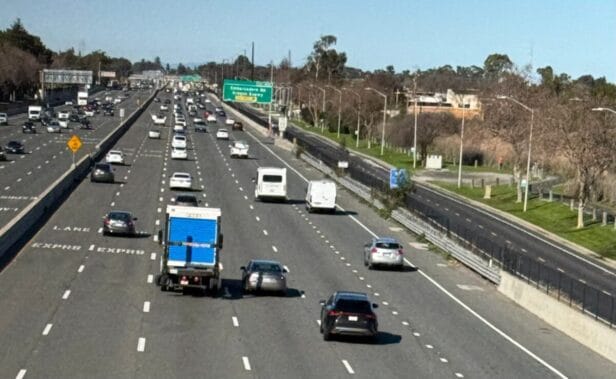
According to the TomTom Traffic Index report for 2025, the average speed of traffic in San Francisco during rush hour dropped to 16.6 km/h. Annual time lost in traffic jams reached 116 hours per motorist, which is 10 hours more than the previous year.
Analysts have previously noted that San Francisco is among the cities with the most challenging traffic conditions in the United States, where the burden on transportation infrastructure continues to grow. More details on this can be found in a separate Factum article:
The growth in traffic in Silicon Valley is linked to the overall economic recovery of the region, but experts point to the additional burden created by the fleet of autonomous taxis in densely populated areas.
Changes in the administrative regulation system
At the beginning of 2026, California enacted AB 1777, a bill that eliminates the legal vacuum regarding driverless transport. The new regulations give law enforcement officers the right to record traffic violations by autonomous systems and send official notices of non-compliance directly to the manufacturing companies.
“Public safety is a priority, and city roads must remain accessible to firefighters and paramedics under all circumstances,” said Supervisory Board member Bilal Mahmoud during the hearings.
Technical incidents and the Teamsters’ position
A major failure was recorded on December 20, 2025, when 1,593 Waymo vehicles simultaneously stopped moving as a result of a citywide power outage and loss of 5G connectivity. According to the California Public Utilities Commission, the vehicles blocked intersections while waiting for commands from remote operators, whose system was overwhelmed by the scale of the incident.
Similar problems with autonomous taxis have been reported in the city before. For example, in one case, Waymo robotaxis completely stopped traffic on the streets of San Francisco, causing serious traffic jams. Details of this incident can be found here:
Peter Finn, president of Teamsters Joint Council 7, emphasized during a protest on March 2:
“Excuses about blocking emergency services will continue until we achieve real accountability from companies for operational failures.”
Prospects for the development of autonomous transport in the region
Waymo management acknowledged communication gaps and announced a review of emergency protocols for operating in conditions of infrastructure failures. Nevertheless, city authorities intend to appeal to the California DMV to introduce municipal quotas on the number of active driverless vehicles during rush hour.
The company had previously been forced to temporarily suspend its robotaxi service in San Francisco after a series of technical problems. Details can be found in the Factum article:
It is expected that by the end of 2026, updated standards for the interaction of autonomous systems with city services will be developed, aimed at minimizing the risk of repeat traffic blockages in San Francisco.