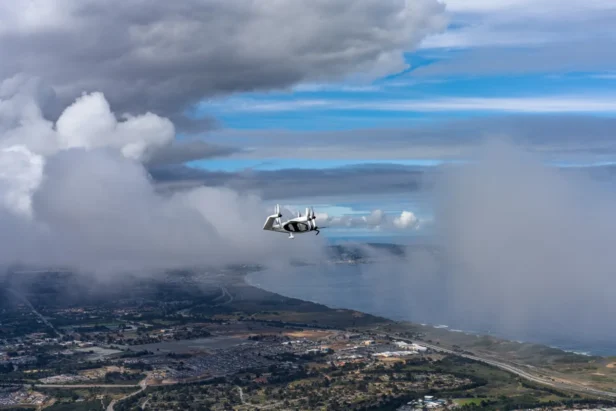
On March 13, an electric aircraft flew over San Francisco Bay. Silent. Zero emissions. With a pilot on board. Tail number N545JX, operated by Joby Aviation, took off from Oakland International Airport, crossed the bay, passed by the Golden Gate Bridge, and banked over the Marin Headlands.
The whole route took about ten minutes. By car, it’s over an hour.
Joby is calling it a historic moment. And technically, it is. This was the first widely publicized public flight of an electric air taxi over the Bay Area — the launch of the Electric Skies Tour, which the company is tying to the nation’s 250th anniversary.
But there’s a detail most outlets missed.
Two Aircraft, Two Stories
N545JX is a pre-production prototype. A show car, if you will. A machine built for cameras and spectators on the waterfront.
The real work is happening on a different aircraft. N547JX is the first Joby plane assembled to FAA production standards. It flew on March 11 — two days before the Golden Gate flight. But not over the bay. At a test site in Marina, California. No press. No Golden Gate in the frame.
N547JX is the one going through certification. It’s the one FAA pilots will fly during so-called for-credit tests — the trials whose results actually count toward a type certificate.
The flight over the bay was great marketing. The flight in Marina was the real step toward commercial service.
What the Aircraft Can Do
The Joby S4 is an electric eVTOL — vertical takeoff, then wing-borne flight. Six rotors. Top speed: 200 mph. Range: about 100 miles. Seats four passengers plus a pilot. Quieter than a helicopter. Zero emissions.
The demo flight was piloted by Andrea Pingitore. The company is based in Santa Cruz.
When This Becomes Real
According to the company, roughly 80% of pre-certification internal testing is complete. Joby has been selected for the federal eVTOL Integration Pilot Program, which allows testing and integration of the technology in real airspace across ten states: Arizona, Florida, New York, Texas, and others. California is not yet on that list.
Joby plans to launch its first commercial flights in Dubai through a partnership with Uber. That could happen as early as 2026. In the U.S., the company is targeting the second half of the year, but everything hinges on certification.
Key partners: Uber for in-app booking integration, Delta Air Lines for airport infrastructure. Production is scaling up: a new 700,000-square-foot factory in Dayton, Ohio. The goal is four aircraft per month by 2027.
Why This Matters for the Bay Area
San Francisco drivers lost an average of 112 hours to traffic in 2025 — the third most congested city in the country. The geography — the bay, the bridges, the peninsula — makes the region a textbook market for air taxis.
But for now, it’s a prospect, not a reality. A dozen flights a day won’t unclog the 101 or 280. This is transportation for people willing to pay a premium. How much exactly? Joby isn’t saying yet.
The bottom line: an electric taxi really did fly over the Bay Area. Silently. This is not a render or a concept. But between a demo flight and a scheduled run from SFO to San Jose, there’s still a full certification process to get through.